Case Study 13
Hides and Skins: Tradition meets Innovation
Centravo and Swiss Nutrivalor
Valuable leather has been produced from hides and skins for centuries. Today, this long-standing tradition is combined with state-of-the-art technology and fossil fuel-free processes.
-
Valuable by-product of livestock production.
-
Effective cooling important to ensure quality.
-
Upgrade of cooling system elimated fossil fuel use and reduced CO₂ emissions.
-
Significantly improved energy efficiency throughout processing.
Hides and skins have long been recognised as valuable by-products of livestock farming. Their processing into high-quality leather remains a key element of a sustainable circular economy.
Thanks to Switzerland’s stringent animal welfare standards and favourable climatic conditions, hides and skins from Swiss cattle and calves are particularly well suited for the production of premium leather goods, especially in Alpine regions. The temperate climate, minimal presence of vermin, and the rare use of barbed wire on pastures result in significantly less tissue scarring. This reduces waste during leather processing and provides a clear quality and economic advantage for tanneries.
Centravo plays a central role in this value chain. The company collects almost all hides and skins from Swiss slaughterhouses and transports them daily to its processing facility in Lyss. Each year, approximately 830,000 hides and skins (around 14,000 tonnes) are processed, preserved, and prepared for further processing in European tanneries or for export worldwide.
The Challenge
Fresh hides must be cooled under controlled conditions immediately after delivery to preserve the quality of the raw material. This cooling process is energy-intensive, particularly as the hides still have a temperature of over 25 °C upon arrival.
Centravo’s objective was to significantly increase energy efficiency, completely replace fossil fuels, and substantially reduce CO₂ emissions—without compromising product quality or food safety.
Measures
As part of a major refurbishment of the refrigeration system, a new, highly efficient cooling installation was implemented. The waste heat generated during refrigeration is now captured and reused through an integrated heat recovery system. As a result, the use of fossil fuels has been completely eliminated.
To enhance its on-site renewable energy capacity, the facility installed a new rooftop photovoltaic system in 2023.
Centravo / Swiss Nutrivalor Hides and Skins
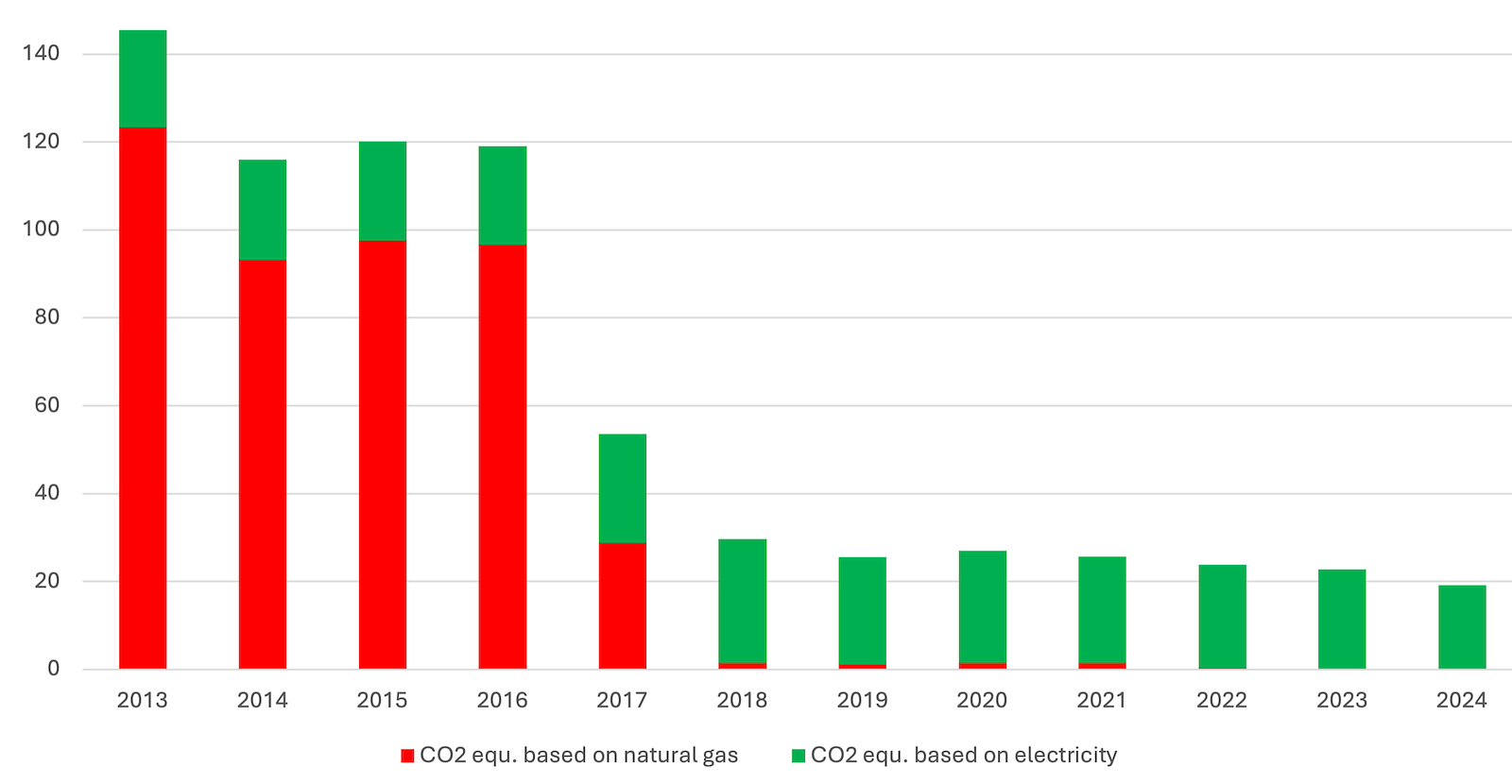
Annual Carbon Emissions CO₂(equ. tonnes / year)
Results
-
-
-
100% elimination of fossil fuels, including natural gas.
-
Reduction of CO₂ emissions by approximately 100 tonnes per year compared to 2015.
-
Reduction in grid electricity consumption of around 25%, equivalent to approximately 6.5 tonnes per year, through photovoltaic power generation.
-
Significantly increased overall energy efficiency through systematic heat recovery.
-
-
Conclusion
The hides and skins processing facility in Lyss demonstrates how sustainable resource use, technological innovation and Swiss quality standards can work hand in hand. By consciously optimising energy use and completely eliminating use of fossil fuels, Centravo is making a measurable contribution to reducing operational emissions and supporting climate protection across the entire value chain.
Case Study 13 - Version 2, February 2026